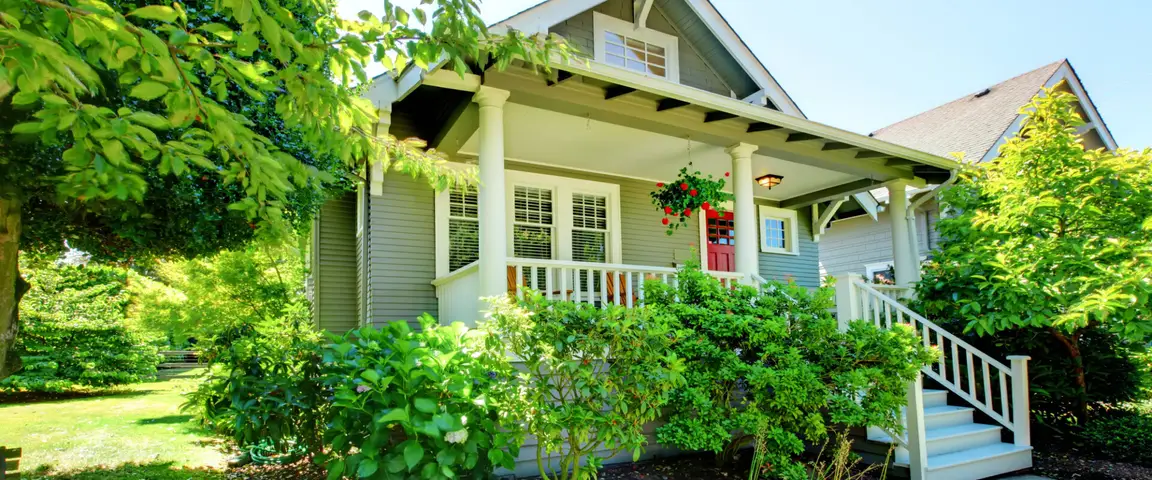

Two houses in the same Naperville subdivision. Same builder. Same floor plan. Same square footage, same lot size, same schools, same tax bill.
One of them goes under contract in about a week. The other takes two price cuts, sits on the market for three months, and closes for noticeably less.
Most sellers hear that and assume the second house had a problem. A bad roof, a weird layout, something structural. Usually it did not. And here is the part that changes how you think about your own home: those were not similar houses. Twenty-some years ago, they were the same house. Same blueprint, same elevation package, same builder-grade fixtures, same two trees planted out front on the same day.
I grew up in Naperville. I left, and I came back to raise my family here. Which means I walk into listings around this town and get a strange flicker of recognition. This is laid out exactly like my buddy’s house. That is my parents’ kitchen with the sink on the other wall. These builders repeated plans, over and over, across entire subdivisions.
Your house has a twin somewhere in Naperville. And it is probably not selling for your number anymore.

The algorithm still thinks they are the same house
Before anything else, this is worth understanding, because it is where a lot of sellers get their first bad number.
An automated home value estimate is pricing the house the builder handed over, because the spec sheet is essentially all it has ever seen. Same plan, same footage, same year, same neighborhood. From the outside, from the data, those two houses look identical.
An automated estimate is a sight-unseen offer on your home. It has never walked through the front door. It has never opened a closet. It has never stood in the back bedroom and noticed the thing a buyer would notice in four seconds.
Ask yourself whether you would make a sight-unseen offer. Would you buy a car off a book value, never drive it, never check the mileage, never look under the hood, and just wire the money? Nobody does that. And yet we will take that same kind of number on the largest asset we own and treat it as fact.
The buyers who walked through both of those Naperville homes disagreed with the algorithm. They are the ones with the money, so their opinion is the one that sets the price.
The first gap: you cannot see your own house
The first thing that separates the twins has nothing to do with the kitchen. It is that after enough years in a house, you stop being able to see it.
That is not an insult. That is just how brains work. You have walked that hallway ten thousand times. It stopped registering years ago. The same thing that makes a home comfortable makes it invisible to the person living in it.
Here is a real example. I had a listing that would not sell, and showings were fine. Traffic was not the problem. People were coming through and simply not writing offers.
The feedback was not vague either. Buyers were saying the house smelled.
The owners could not find it. Not because they were ignoring the feedback. They could not smell anything at all.
So I went back and walked the house room by room. I get to one specific room, open the door, and it hits me in the face. Not subtle. Not something you have to hunt for. Anybody who had not lived there would have caught it in a second.
A few rooms in that house had almost no air circulation. We cleaned them hard, opened the windows, brought in fans, added air fresheners. The house sold.
That was the entire thing standing between that home and a buyer. And the people living in it had been told, in writing, exactly what the problem was, and still could not act on it.
This is why the invisible category matters so much. Once a buyer smells something off, they cannot unsmell it. Now the closet looks small. Now the carpet looks tired. Now they are wondering what is going on in the crawlspace. One thing you genuinely cannot perceive rewrites how a buyer reads your entire house.
The same applies to clutter, and this is not a lecture from someone with a spotless home. My wife and I have three kids. Our house is a disaster. When we sold our place, I did exactly what I tell every seller to do. Hide it in the cabinets. Nobody looks in there.
The second gap: twenty years of decisions
The bigger difference between the twins took two decades to build.
Those houses were identical on day one. Then people moved in and started making decisions. One owner redid the kitchen at some point. New flooring. Replaced the windows when they finally went. The other owner kept everything running properly and never changed much, which is a completely reasonable way to own a home.
Neither of them did anything wrong. But twenty years later, that is not the same house anymore, and the market is going to price the difference. The market does not care what you want. Buyers pay for the value they can actually see, from the driveway, on their phone, in about four seconds.
So should you renovate before you list?
This is where sellers get talked into spending money they should not spend, so let me be direct.
If you are staying in that house another few years, absolutely do the kitchen. Enjoy it. You earned it.
If you are selling, you are rehabbing someone else’s house at that point. You will pay for it, take on the timeline and the stress, and then a stranger gets to enjoy it.
If you do not want to take my word for it, look at people who do this professionally. House flippers buy, improve, and resell, and their entire income depends on knowing precisely which dollar comes back. They do not blow out kitchens. They do not move walls. They do not install top-end anything. Paint, flooring, fixtures, deep clean, make it read move-in ready, done. If high-end upgrades reliably paid, professionals would be doing them on every single project. They never do. That should tell you something.
You cannot buy back twenty years of updates in the six weeks before you list. You do not need to. You need the house to read clean, and then you need the number to match the house you actually have.
The seller who actually loses money
It is not the one with the older kitchen.
It is the one with the untouched house who wants the updated twin’s price. Same plan, same square footage, so obviously the same value.
The market does not read it that way, and this is where the money goes. When you price above where the market sees you, you do not get more money. You get fewer people. You are not losing the number, you are losing the audience. Most buyers filter you out before they ever look at a single photo.
And you need that audience. Think about how you got that house in the first place. You walked in and something about it landed on you. The person who sold it to you felt the same thing when they bought it. And once you sell, you are about to go do it again on some other house.
That is what you are actually shopping for when you list. Not a number. The next person who walks in and feels what you felt.
Price where the market sees you and you get fifty chances to find that person. Price above it and you get maybe four, and now you are hoping one of the four falls in love, when what you needed was volume.
Then the days on market start climbing, and that number tells its own story. Nobody wants to be the first offer on a listing that looks like it is bleeding. The offers that eventually arrive are not just lower, they are testing you.
The twin that sold fast did not have a better house. It had a correct number on day one, and it never had to explain itself.
The hesitation nobody says out loud
Here is the quiet part, and it is the reason a lot of Naperville homeowners put this off another year.
They already suspect their number is not the neighbor’s number. They just do not want anyone to confirm it. So they wait, they watch listings, and they hold onto a figure that feels fair, because as long as nobody prices it, the number stays intact.
The hidden risk is that waiting does not protect the number. It just moves the conversation later, usually to a point where you have less flexibility, a tighter timeline, and fewer options. Meanwhile the twin down the street lists, sells, and quietly becomes the comp that everyone uses against you.
Knowing what you are actually working with is not the bad news people expect. It is the thing that lets you plan. A home that has not been updated in twenty years sells perfectly well, often quickly, at its own honest number. What does not work is asking for someone else’s.
What to do next
If you are anywhere in the thinking-about-it stage, this is the right time to be thinking about it, not the week before the sign goes in the yard.
I put everything I walk sellers through into a free Naperville Seller’s Guide. What actually returns money in prep and what to skip, how your price determines how many buyers ever see your listing, and what a normal first thirty days on the market looks like so you can tell early whether something is off.
Get the free Naperville Seller’s Guide
It is free, and you can read the whole thing without ever talking to me.
Frequently asked questions
My neighbor has the same floor plan and sold for more. Why can I not get that price?
Same plan does not mean same house anymore. Two decades of different decisions separate them, and buyers price what they can see. Your house sells fine at its own number. It sits when you ask for theirs.
Do I need to remodel before selling my house in Naperville?
Only if you are staying a few more years and want to enjoy it. If you are selling, you are paying for someone else’s house. Professional flippers, who do this for a living, stick to paint, flooring, fixtures, and cleaning for exactly this reason.
How accurate are automated home value estimates?
They are pricing the house as built, from data, without ever having been inside. Treat them as a starting reference, not a valuation.
What actually matters before listing, then?
Air and smell, light, and clutter. Close to free, invisible to the people living there, and completely capable of costing you a buyer before they reach the second floor.
How can I tell if my home is priced wrong?
Compare showings to offers. Heavy traffic with no offers usually points to condition or presentation. Light traffic from day one usually means the price filtered buyers out before they ever saw a photo.
NAPERVILLE RESOURCES
- Options For Selling a House in Naperville
- Naperville Real Estate Blog
- Sell Your Naperville House Fast
- Get Your Naperville Seller’s Guide
- What Is My Naperville Home Worth
Most Recent Posts:
- Should You Wait Until Spring to Sell Your Oswego Home?
- Is Your Naperville Agent Really Working for You? Here’s How to Tell
- What Happens After You Accept an Offer on Your Aurora Home
- Downsizing Doesn’t Always Save You Money in the Chicago Suburbs (And That’s Okay)
- Why Two Identical Oswego Homes Sold $40,000 Apart
Sean Gimpert
O’Neil Property Group
630-315-0723
sean@oneilpropertygroup.com
Get the Free Naperville Seller Guide
Where should I send the guide?