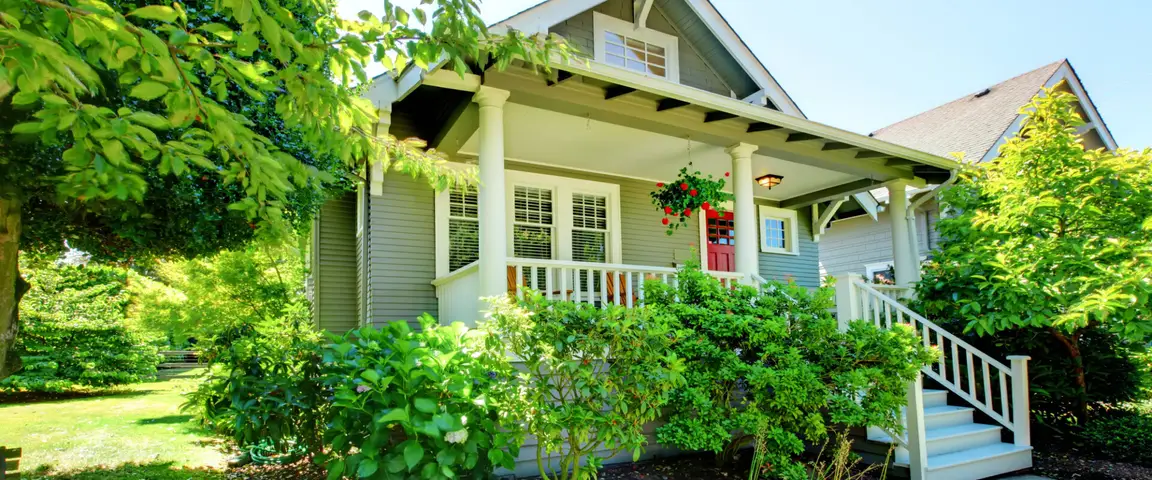

Two houses in Oswego. Same street, same builder, same floor plan. Same bedroom count, same bathroom count, nearly the same square footage, same year built.
One went under contract in about a week. The other sat, took two price cuts, and closed roughly forty thousand dollars lower.
If you are the seller of that second house, the question writes itself. My neighbor got what he got. My house is the same house. Where did my forty thousand dollars go?
Here is the honest answer, and it is not the answer most sellers want. Those were never the same house. They were the same listing.
A listing is not a house
A listing is what a computer can see. Beds, baths, square footage, year built, street name. That is what an automated value estimate reads. That is what your neighbor’s closed sale price looks like from the outside. And it is the only version of your home that is genuinely identical to his.
Buyers do not buy listings. Buyers walk through a door and form an opinion faster than most sellers believe is possible. Within a few seconds of stepping inside, they have already sorted your home into one of two piles: this is the good one, or this is the other one.
That sorting is not happening on paper. It is happening in the hallway.
Where the gap actually comes from
There is a simple way to prove this to yourself, and it costs you an afternoon.
Go walk new construction. There is plenty of it around Oswego. Step into any of those subdivisions and you will find the same three or four models repeated down the block, priced within a narrow band of each other. And at that moment, they genuinely are the same. Same materials, same finishes, finished within weeks of each other. Nobody has lived in them yet.
That is what a subdivision looks like at year zero. The spread is close to zero.
Now take that same street and run the clock forward thirty years.
One owner redid the kitchen in 2019. Another redid it in 1998 and has not touched it since. One put in a fence, one put in a pool, one let the deck go soft. One replaced the furnace last year and one is nursing a unit that is on borrowed time. One refinished the floors, one has the original carpet in three bedrooms.
That is thirty years of individual decisions applied to four identical floor plans.
The forty thousand dollar gap did not appear at the closing table. It was built one decision at a time over three decades, and the sale is simply the day everyone finds out what those decisions added up to.
So when a neighbor’s home closes higher than yours, that is not the market behaving strangely. That is thirty years arriving on the same afternoon.
The two things you actually control
Once you accept that, the problem gets much smaller, because it collapses into two variables. Condition and price.
And those two are really one variable. Whatever the condition of the home is, there is a price that sells it. There is always a price that sells it. Every house sells. It is a question of what number moves it.
What a seller does not get to do is bring one condition to the table and expect the price attached to a different one.
That is not a moral judgment about anyone’s housekeeping. It is arithmetic that buyers do without being asked.
The part sellers cannot see
Here is the uncomfortable half.
If you have lived in your home for years, your eyes stopped reporting on it a long time ago. This is not a criticism, it is how human attention works. You walk past the same thing several hundred times and your brain quietly stops flagging it. The chip in the trim, the room that is always a little dark, the smell of the house you have lived in since 2011. All of it becomes invisible to you specifically.
Buyers are seeing it cold. They have no history with it and no affection for it, and they are making decisions at a speed that would alarm most sellers.
The good reaction happens twice, and both times it is immediate. The first is when they step out of the car, before anyone has said a word. Curb appeal is not a marketing concept, it is the first data point. The second is the moment the door opens. When a home is right, buyers say so out loud. That audible reaction at the threshold is one of the most reliable signals in this business.
The bad version is just as fast. Buyers tend to find one thing they cannot unsee. It is rarely the thing the seller would have guessed. But once a buyer notices it, it is noticed, and it colors the rest of the walkthrough. They spend the remaining rooms looking for the next one.
The most expensive small problem in Oswego homes
Here is the one that quietly costs sellers real money.
A dim room reads as a small room.
A buyer walks into a bedroom with two burnt-out bulbs and half-closed blinds and their brain files that room as small. Small rooms get passed over. But that room is not small. That room is dark. The seller is not standing there to explain the difference, and the buyer is not going to ask.
Lightbulbs are the cheapest fix available in a real estate transaction, and they get skipped constantly.
The prep list that actually matters
Most sellers brace for a renovation conversation. They do not need one.
The real list is short:
- Declutter and pack. You are moving anyway. Start with the things you will not miss.
- Deep clean. Not a tidy. A clean.
- Selective neutral paint, only where it is genuinely needed.
- Replace burnt-out lightbulbs and open the blinds before every showing.
On decluttering, a realistic note: you live there, and you still have to live. Life is happening in that house. Minimize what stays out on surfaces, and when a showing gets scheduled, put things in a drawer or a cabinet. Nobody is opening cabinets.
Beyond that list, the two largest projects worth considering are flooring and paint, and those are deliberate decisions with a return calculation attached, not reflexes.
One more thing that costs nothing: leave during showings. Buyers need to be able to say something negative about a house to each other. That is not rudeness, that is how people arrive at decisions. They cannot do it with the owner standing in the kitchen. A buyer who cannot speak freely is a buyer who leaves without falling for the place.
The price half, which somehow goes wrong more often
The market does not care what a seller wants.
Nearly every overpriced listing that sits started with a number that came from inside the house rather than from outside it. A retirement calculation. A mortgage payoff. What a relative got in a different market in a different year.
Even a monopoly cannot charge whatever it wants. At some point buyers simply do not have the money. A house on a street in Oswego is not more powerful than a monopoly.
Now here is the part that actually makes sellers money, and it sounds backwards.
You bought that house once. Someone walked you through it and something in you decided, this one. That is how every home gets sold, including yours.
Price a home where buyers actually are, and it gets seen by a large pool of people with that reaction still available to them. Some of them will stretch past what is strictly reasonable, because they want it, not because a spreadsheet approved it.
Price it forty thousand above where buyers are, and it gets a handful of showings from people running arithmetic. Nobody falls in love while doing math.
The hidden risk sellers do not see coming
Here is the quiet cost of the overpriced approach, and it is worth naming plainly.
The first two weeks a home is on the market are the only two weeks it will ever be new. Every serious buyer with an active search sees it in that window. If the number is wrong, those buyers move on, and they do not come back for a price cut. They have already sorted the home into the other pile.
Worse, an overpriced home ends up performing a service for its neighbors. It becomes the comparison that makes the correctly priced house down the street look like a bargain. That seller is paying, in time and eventually in price, for someone else’s sale.
There is also a fear worth addressing directly. Many sellers hold a high number because they are afraid of leaving money on the table. In an open, properly marketed sale, leaving money on the table is not a real thing. If a buyer would have paid more, that buyer would have bid more. That is what full market exposure is for. The only genuine version of that fear is a home that was never properly marketed or shown, and that is an agent problem, not a pricing problem.
What this looked like when it went wrong
A seller once wanted to move quickly and then named a number roughly eighty-five thousand dollars above where the comparable sales supported. It would have been the highest sale in that neighborhood by a wide margin. That number had not come from the market. It came from a spreadsheet the owner had built.
The advice given was straightforward: if speed is the goal, price where the buyers already are and let them compete upward. That was not the answer the seller wanted, and he listed with someone who told him something more comfortable.
Three months. A price cut. Another price cut. Off the market, unsold.
That listing was lost by telling the truth. It is still the right call, because three months of a seller’s life is worth more than a signature on a listing agreement.
Where to start
If you are thinking about selling in Oswego, start by separating the two questions. What condition is the home actually in, seen by someone who does not live there? And what number does that condition support in today’s market?
Those questions have real answers, and neither of them requires committing to anything.
Get the free Oswego Seller’s Guide. It walks through pricing and prep in the order you would actually do them, so you find out in week zero what most sellers learn in week six.
https://gimpertrealty.com/go/oswego-seller-guide/
Frequently Asked Questions
Why did my neighbor’s home sell for more when it is the same model?
Because a floor plan is not a condition. Homes built the same year on the same street diverge across decades of owner decisions on kitchens, mechanicals, flooring, and outdoor space. Buyers price the home in front of them.
How much should I fix before listing?
Less than most sellers assume. Declutter and pack, deep clean, selective neutral paint where needed, and replace burnt-out lightbulbs. Anything larger, particularly flooring, should be a deliberate decision with a return calculation, not a reflex.
Should I list high so I have negotiating room?
Pricing above the market usually produces fewer showings from buyers doing arithmetic rather than buyers responding emotionally. Homes that beat their asking price are typically the ones priced where the market already was.
What if my home needs significant work?
Every house sells. It is a question of price. Selling as-is is a legitimate choice that trades the top of the price range for speed and convenience, and for many sellers that is the right trade.
How long does it take to sell a home in Oswego?
Price and condition matter far more than the calendar. Well-presented homes priced correctly move quickly. Homes priced above the market sit in any season.
Do I have to commit to anything to get a value opinion?
No. Understanding where a home stands is a conversation, not a listing agreement.
Oswego Seller Resources
- Options For Selling a House in Oswego
- Oswego Real Estate Blog
- Sell Your Oswego House Fast
- Get Your Oswego Seller’s Guide
- What Is My Oswego Home Worth
Most Recent Posts:
- What You Actually Walk Away With When You Sell Your Naperville Home
- What Your First Meeting With a Listing Agent Actually Looks Like in Aurora
- Selling a House During a Divorce in Illinois: What You Need to Know First
- Selling a Rental in Illinois: Should You Cash Out or Keep It?
- What Actually Happens on Closing Day When You Sell Your Naperville Home
Sean Gimpert
O’Neil Property Group
630-315-0723
sean@oneilpropertygroup.com
Get the Free Oswego Seller Guide
Where should I send the guide?